


High Temperature Calcined Alumina
Excellent sintering performance, stable linear shrinkage, narrow particle size and size distribution, widely used in refractory materials and ceramic industries
Description
Company Advantage
Strict Quality Management
Our company strictly implements ISO9002 quality management standards and has established a complete quality management system to ensure the long-term stability of product quality.
Efficient Service
Our production is efficient and reliable, so we deliver on time and within delivery deadlines. At the same time, our team is always happy to help customers and strive to solve customer problems in a short time.
Competitive Price
We have long-term services in wholesale alumina, high-temperature alumina, and other products, and have established long-term and stable cooperative relationships with many retailers and agents to provide our customers with reasonably priced products.
OEM Available
Our employee team has high R&D capabilities, superb design and development capabilities, skilled manufacturing technology, and rich product application experience, and can also meet OEM business needs.throughout the entire industry chain.
What is Calcined Alumina At High Temperature
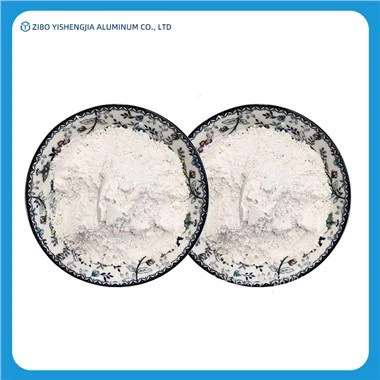
Calcined α-alumina white powder, uniform particle size, easy to disperse, chemical stability, high temperature shrinkage property moderate, α-alumina has good sintering performance. The α-alumina products are the basic raw materials for the production of heat-resistant, wear-resistant and corrosion-resistant products, such as high aluminum refractory materials, α-alumina can be used for high strength ceramic products, automotive spark plugs, advanced grinding materials, etc. Welcome to inquire about calcining α-alumina.


Cost-Effective
Due to its ability to be recovered and retrieved for more blasting passes, aluminum oxide is also a cost-effective blasting abrasive.
High Strength
Because aluminum oxide is a tougher abrasive than most, there is less particle shattering, which lowers the amount of dust produced.
Low-Iron Content
Calcined alumina at high temperature is a low-iron content abrasive that won't cause any rust to appear on the surface of your part. Rust deposits can cause problems with upcoming processes.
Recyclable
If you are a major user who produces a lot of used abrasives, you can also recycle them back to the manufacturer for another use, which will save your disposal costs.
Versatility
Calcined alumina at high temperature is a versatile material for a variety of industrial applications when it comes to finishing services.
Production Process: Transforming Raw Alumina into Excellence
The manufacturing of calcined alumina involves subjecting raw alumina to high temperatures, typically above 1000°C. This process, known as calcination, induces structural changes, resulting in a material with enhanced hardness and thermal stability. The controlled heating ensures the removal of water and impurities, leaving behind a refined form of alumina with superior properties.
Applications in Refractories: Enhancing Heat Resistance
Calcined alumina finds extensive use in refractory materials due to its ability to enhance heat resistance and durability. Incorporated into refractory bricks and castables, calcined alumina contributes to the structural integrity of linings in furnaces and kilns, making them capable of withstanding extreme temperatures in various industrial settings.
Abrasive Industry Usage: Precision in Grinding Wheels
The abrasive industry relies heavily on calcined alumina for its remarkable abrasive properties. In the production of grinding wheels, calcined alumina acts as a key component, imparting hardness and toughness. This results in abrasives that efficiently grind and shape metals, ceramics, and other materials, contributing to the precision and efficiency of various manufacturing processes.
Catalyst Support Material: Driving Efficient Chemical Processes
As a catalyst support material, calcined alumina plays a crucial role in catalysis. Its high surface area and stability make it an ideal substrate for supporting catalysts, facilitating efficient chemical reactions in processes ranging from petrochemical refining to environmental applications.
Polishing Compounds: Crafting High-Quality Finishes
In the manufacturing of polishing compounds, calcined alumina is employed to achieve high-quality finishes in diverse applications. Its abrasive nature, coupled with controlled particle size, enables the production of compounds that polish surfaces effectively, contributing to the production of refined and smooth surfaces.
Ceramic Industry Impact: Shaping the Future of Ceramics
Calcined alumina significantly impacts the ceramic industry by being a crucial component in ceramic formulations. Its incorporation influences the final properties of ceramics, including strength, hardness, and thermal stability. This makes it an indispensable material in the production of ceramic tiles, sanitaryware, and advanced ceramics.
Electrical Insulation Properties: Safeguarding Electrical Applications
With excellent electrical insulation properties, calcined alumina is utilized in the production of insulating materials for electrical applications. Its use in insulators and other electrical components ensures the safe and efficient operation of various electrical systems.
Reactive Alumina vs. Calcined Alumina: Unraveling the Differences
While both reactive alumina and calcined alumina are alumina derivatives, they exhibit differences in properties and applications. Reactive alumina tends to have higher reactivity, making it suitable for certain applications like catalysts, while calcined alumina, with its enhanced hardness, finds prominence in abrasives and refractories.
Properties of Calcined Alumina At High Temperature
Alumina is used in oxidizing and reducing atmospheres up to 1650°C or 2900°F as well as vacuum environments of 2000°C or 3600°F. At 1000°C, it keeps 50% of the tensile strength it has at room temperature. While metals are weakened by high temperatures, alumina ceramics retain their strength when they return to normal temperatures and are unchanged.
Abrasion wears down a material by rubbing it away by friction. The resistance to abrasion means a material will maintain its original structure even after mechanical wear. Alumina ceramics are high in abrasion resistance due its hardness.
Alumina is resistant to acids and alkalis at high temperatures because it is inert, not chemically reactive, which makes it resistant to the effects of chemicals such as solvents and salt solutions.
The density of a material is its mass divided by its volume. This is read as grams per cubic centimeter (g/cm3), where grams is mass and cubic centimeters is volume. The volume and density of the material are inversely proportional.
Process of Calcined Alumina At High Temperature
Grinding: The mined bauxite is taken to a processing plant, where it is ground to extract the aluminum oxide. The composition of the removed aluminum oxide looks like a white powder.
Bauxite: The ground bauxite is washed, dried, and dissolved in a mixture of caustic soda and lime to form a slurry that is heated in a digester to 300°F or 145°C and placed under 50 lbs. of pressure for several hours to dissolve the aluminum compounds.
Mixing Stage: The slurry is pumped through a series of flash tanks to reduce the pressure and heat on the material. The flash tanks cool the material at atmospheric pressure and flash off steam.
Settling Tank: The impurities in the slurry, like sand, iron, and other elements that do not dissolve, settle to the bottom of the tank. The liquor at the top of the tank moves through a set of filters and is washed to recover the alumina. It is filtered several times before moving on.
Settling Tank: The filtered clear sodium aluminate is pumped into a series of precipitators. Particles of alumina are added to begin the process. The alumina grows around the seeds causing them to fall to the bottom of the tank to be removed and sent to thickening tanks. The material is filtered again.
Precipitators: The final step in the extraction of alumina involves a heating process to remove water from the alumina hydrate. It is filtered and washed again to remove impurities and moisture. A conveyor, seen in the diagram, moves the hydrate to calcination, a gas fired kiln on an incline that rotates to ensure even heating.
Calcination: Newer methods of processing use a fluid bed calcining that suspends the alumina particles above a screen of hot air and calcined.
How to Maintain Calcined Alumina At High Temperature
Ventilation
High-temperature calcined alumina should be stored in a well-ventilated place and should not be placed together with flammable, explosive and other harmful items to avoid dangerous situations such as fires and explosions.
Avoid light
High-temperature calcined alumina should be stored in a cool, dry, and dark place to avoid prolonged exposure to sunlight or strong light.
Avoid water
High-temperature calcined alumina should be placed in a dry location to avoid the intrusion of moisture and moisture, otherwise it will cause chemical reactions.
Avoid the tide
It is very important to deal with the moisture problem of high temperature calcined alumina. If the storage warehouse does not have constant temperature control, it is best not to store alumina in underground warehouses, because the humidity here will be very high, which will relatively easily cause the alumina to absorb too much water, resulting in a lower remark.
Calcined High Temperature Alumina Market AnalysiS
Calcined High Temperature Alumina (HTA) is a widely used synthetic material in various high-temperature applications due to its exceptional mechanical and thermal properties. This advanced form of alumina is produced through the calcination process, which involves heating aluminum hydroxide at high temperatures to remove moisture and other volatile substances. The resulting HTA exhibits excellent resistance to thermal shock, corrosion, and high electrical insulation, making it a preferred choice in industries such as refractories, ceramics, abrasives, and catalysts.
The market for Calcined High Temperature Alumina has witnessed significant growth in recent years, driven by the increasing demand for advanced materials with superior thermal properties. Rising industrialization, especially in emerging economies, has led to a surge in infrastructure development, bolstering the demand for HTA in refractories and ceramics. Additionally, the growing need for efficient catalysts in the chemical and petrochemical industries has further propelled the market's expansion. Considering these factors, market research suggests a robust growth trajectory for Calcined High Temperature Alumina in the coming years, with a projected compound annual growth rate (CAGR) exceeding X% during the forecast period.
Zibo Yishengjia Aluminum Co., Ltd. is mainly engaged in the production of alumina series products. The company has strong technical force, advanced technology, excellent equipment and complete testing equipment. Specializing in the production of special aluminum hydroxide, calcined а - alumina, high-purity alumina, activated alumina. Products are widely used in insulation materials, heat shrinkable materials, polishing materials, color glaze, light-emitting materials, electronic ceramics, transparent ceramics, building materials, refractories, chemical drying adsorption and other industries. Long term wholesale alumina, high temperature alumina products, enjoy a high position among consumers, the company has established a long-term stable cooperative relationship with a number of retailers and agents. Since its establishment, the company has been in line with the enterprise tenet of "market-oriented, quality for survival, product for development, management for efficiency" and the business philosophy of "small wins rely on wisdom, big wins rely on morality" to be human, work and seek development.



FAQ
Hot Tags: High Temperature Calcined Alumina, China High Temperature Calcined Alumina manufacturers, suppliers, factory, alumina for refractory applications, alumina for ball materials, monocrystalline fused alumina, alumina for fiber tiles, aluminium hydroxide side effects, aluminum tetrahydroxide


