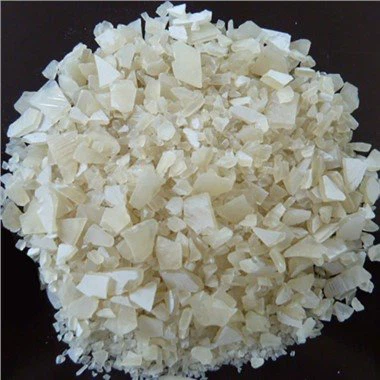
Flaky Aluminum Sulfate
Flaky aluminum sulfate is a specially treated aluminum sulfate, which is in the form of flakes and is commonly used in fields such as water treatment and wastewater treatment. Its advantage is that it is easy to dissolve and can quickly form flocs, thereby improving the effectiveness of water treatment. In addition, the transportation and storage of sheet-like aluminum sulfate is also relatively convenient because its form is relatively stable and not easily affected by external environment.
Description
What is Flake Aluminum Sulfate
This Flake Aluminum Sulfate has a wide range of applications. It is not only used as a special inorganic aluminum salt chemical for drinking water treatment, but also as a neutral sizing agent for paper and raw material for ammonium alum. It is more and more used to combat the massive proliferation of algae stimulated by excessive phosphorus generated by human activities, effectively treat industrial water and wastewater, absorb the precipitation of bacteria, colloid and other suspended substances, and ensure that the color and taste of water are controlled after use.


Benefits of Flake Aluminum Sulfate
Flake aluminum sulfate has a high water purification effect. It can form flocs with suspended solids, colloids, organic matter, etc. in the water, thereby causing impurities in the water to aggregate into large particles, which are easy to settle or filter. Aluminum sulfate can remove turbid substances from water and make the water clear and transparent.
Flake aluminum sulfate has a strong deodorizing effect. The odor in water mainly comes from the decomposition products of organic matter, microbial metabolites, etc. Aluminum sulfate can combine with these organic substances to form insoluble precipitates, thereby removing odors from the water.
Flake aluminum sulfate also has a certain bactericidal effect. Microorganisms such as bacteria and viruses in water can pose a threat to human health, and aluminum sulfate can combine with these microorganisms and destroy their cell structure, thus playing a sterilizing role. This is very important for water treatment to ensure water safety.
Flake aluminum sulfate has the characteristics of high stability and low cost. As an inorganic chemical, aluminum sulfate has high chemical stability and can exert good treatment effects under different water quality conditions. At the same time, the production cost of aluminum sulfate is relatively low, which can reduce the cost of water treatment.
Household Uses
Some of the most common uses of aluminum sulfate are found within the home. The compound is often found in baking soda, although there's some controversy over whether it's appropriate to add aluminum to the diet. Some antiperspirants contain aluminum sulfate because of its antibacterial properties, although as of 2005 the FDA does not recognize it as a wetness reducer. Finally, the compound is the astringent ingredient in styptic pencils, which are designed to stop small cuts from bleeding.
Gardening
Other interesting uses of flake aluminum sulfate around the house are in gardening. Because flake aluminum sulfate is extremely acidic, it's sometimes added to very alkaline soils to balance the pH for plants. When the flake aluminum sulfate comes into contact with water, it forms aluminum hydroxide and a much diluted sulfuric acid solution, which alters the soil acidity. Gardeners who plant hydrangeas apply this property to change the flower color (blue or pink) of the hydrangeas since this plant is very sensitive to soil pH.
Flake Aluminum SulfateWater Treatment
One of the most important uses of flake aluminum sulfate is in water treatment and purification. When added to water, it causes microscopic impurities to clump together into larger and larger particles. These clumps of impurities will then settle to the bottom of the container or at least get large enough to filter them out of the water. This makes the water safer to drink. On the same principle, flake aluminum sulfate is also sometimes used in swimming pools to decrease the cloudiness of the water.
Dyeing Fabrics
Another one of the many uses of flake aluminum sulfate is in dyeing and printing on cloth. When dissolved in a large amount of water that has a neutral or slightly alkaline pH, the compound produces a gooey substance, aluminum hydroxide. The gooey substance helps dyes stick to the cloth fibers by making the dye water insoluble. The role of flake aluminum sulfate, then, is as a dye "fixer," which means that it combines with the molecular structure of the dye and the fabric so the dye doesn't run out when the fabric gets wet.
Paper Making
In the past, flake aluminum sulfate was used in making paper, although synthetic agents have mostly replaced it. The flake aluminum sulfate helped to size of the paper. In this process, Flake aluminum sulfate was combined with rosin soap to change the absorbency of the paper. This changes the ink-absorbing properties of the paper. Using flake flake aluminum sulfate means that the paper was made under acidic conditions. Use of synthetic sizing agents means that acid-free paper can be produced. Acid-free paper does not break down as fast as paper sized with acid.

Our Flake Aluminum Sulfate is extremely acidic, so it is sometimes added to alkaline soil to balance the pH value of plants and change the color of flowers to make your garden look beautiful. At the same time, when it is dissolved in a large amount of water with neutral or slightly alkaline pH value, it will produce viscous substances, help the dye adhere to the fabric fibers, and make the dyeing process of clothes more smooth. In addition, it is also used as a catalyst in various industrial production processes and as a source of aluminum in agricultural applications to inhibit microbial growth.
How to Choose Flake Aluminum Sulfate
1.Appearance
High-quality flake aluminum sulfate should be white or slightly light yellow crystals with no impurities and no peculiar smell.
Content
The content of flake aluminum sulfate should meet the requirements, in which the alumina content should not be less than 38% or the alumina (Al_{2}O_{3}) content should not be less than 15%.
Water solubility
High-quality flake aluminum sulfate should have good water solubility, no residue after dissolution, and be clear and transparent.
Stability
Flake Aluminum Sulfate should have good stability and be difficult to decompose or deteriorate at room temperature.For different application fields, aluminum sulfate with different contents needs to be selected. For example, when used as a water purifier, products with higher alumina content should be selected.

The main component of flake aluminum sulfate is Aluminum Potassium Sulfate or Aluminum Calcium Sulfate, and its molecular formula is $KAl(SO_{4})_{2}$ or $CaAl(SO_{4}) _{2} \cdot xH_{2}O$. Among them, $x$ is crystal water, and its content directly affects the performance of the product.
It loses part of its crystal water when its temperature reaches 86.5°C, and loses all of its crystal water at 250°C. When heated, it expands violently and turns into a sponge-like substance. When heated to 770°C, it begins to decompose into aluminum oxide, sulfur trioxide, sulfur dioxide and water vapor. Soluble in water, acid and alkali, insoluble in ethanol. Aqueous solutions are acidic. After hydrolysis, aluminum hydroxide is generated. Basic aluminum sulfate can be generated by boiling aqueous solutions for a long time. Industrial products are gray-white flakes, granules or blocks, with a light green color due to low iron salt content, and the surface turns yellow due to the oxidation of low-priced iron salts. The crude product is a porous substance with a gray-white fine-grained structure. Non-toxic, dust can irritate eyes.
Flake Aluminum Sulfate Production Process
Raw materials
Aluminium trihydrate is purified from bauxite. Commercial bauxite (30-75% Al2O3) deposits occur in Australia, Jamaica, France, Guyana, Guinea, the USA and Brazil. Bauxite ore is dissolved in strong caustic soda to form sodium aluminate. The aluminium trihydrate is then precipitated by neutralisation (usually with carbon dioxide) or by autoprecipitation (the Bayer process). The other raw material, sulfuric acid, is manufactured for superphosphate production at Farmers Fertiliser Ltd. Acid arrives by road tanker and is pumped into storage tanks.
Step 1
Reacting the raw ingredients. The aluminium trihydrate is transported and stored in one tonne bags. Each bag is carried by hoist to the feed hopper, where it is opened and conveyed to the reaction tank. The reaction water, trihydrate and sulfuric acid batch is stirred for a period of time with water vapour exiting through the stack.
Step 2
Making the final product After the reaction period either liquid or solid alum is made. If liquid, the concentrated batch is run into the dilution tank filled with the dilution water where it cools over time. The liquid alum is then filtered and pumped to storage. There are overhead load out facilities at Morrinsville where a number of liquid chemicals are available in dispatch tanks for road tankers. If solid is made, the concentrated alum is run into the casting pans where it sets, aided by fan cooling. The pans are forklifted to storage racks and from there they are taken to the Crushing Plant and dropped into a hopper. T
How to Maintain Flake Aluminum Sulfate
Storage and transportation
Aluminum sulfate flakes should be stored in a dry, well-ventilated warehouse away from fire and other flammable items. During transportation, moisture-proof and rain-proof measures should be taken to avoid mixed transportation with organic matter, acids, alkalis and other substances.
Protective measures
When using aluminum sulfate flakes, personal protective equipment such as protective glasses, acid and alkali resistant gloves and protective clothing should be worn to avoid contact with eyes, skin and respiratory tract. If it accidentally comes into contact with skin or eyes, rinse immediately with plenty of water and seek medical treatment.
Operation precautions
When handling aluminum sulfate flakes, safety operating procedures must be followed. It is strictly forbidden to touch the product directly with hands. Special tools should be used for handling and adding. During the dosing process, the generation of dust should be avoided to avoid causing air pollution and endangering the health of workers.
Pay attention to the dilution ratio
Flake aluminum sulfate needs to be diluted before use. The general dilution ratio is 1:3 to 1:5. The specific ratio should be determined based on the actual situation and the required water quality. A dilution ratio that is too high may reduce the effectiveness of the product, while a dilution ratio that is too low may cause adverse reactions.
Avoid mixing with other chemicals
Aluminum sulfate flakes should not be mixed with other chemicals, especially products containing alkaline substances. Mixed use may cause violent reactions, harmful gases or fire hazards.
Safe storage
During the storage of aluminum sulfate flakes, the tightness of the container should be checked regularly to prevent the product from getting wet and clumping. If agglomeration is found, it should be broken and screened in time to ensure the fluidity and use effect of the product.
This non-toxic chemical should be stored in a cool, dry place in a multi-layered compartment so that it does not mix with other materials. The high temperature causes this chemical to lose its crystalline state and become leachate and the crystals to stick to each other.
Generally, the acidity of Aluminum sulfate is low and as a result, it has poor corrosion. Therefore, it is better than the pipes, fittings and all the containers that are in the vicinity of this material are made of plastic, fiberglass, stainless steel, or other resistant materials.

Zibo Yishengjia Aluminum Co., Ltd. is mainly engaged in the production of alumina series products. The company has strong technical force, advanced technology, excellent equipment and complete testing equipment. Specializing in the production of special aluminum hydroxide, calcined а - alumina, high-purity alumina, activated alumina. Products are widely used in insulation materials, heat shrinkable materials, polishing materials, color glaze, light-emitting materials, electronic ceramics, transparent ceramics, building materials, refractories, chemical drying adsorption and other industries. Long term wholesale alumina, high temperature alumina products, enjoy a high position among consumers, the company has established a long-term stable cooperative relationship with a number of retailers and agents. Since its establishment, the company has been in line with the enterprise tenet of "market-oriented, quality for survival, product for development, management for efficiency" and the business philosophy of "small wins rely on wisdom, big wins rely on morality" to be human, work and seek development.



FAQ
Hot Tags: Flaky Aluminum Sulfate, China Flaky Aluminum Sulfate manufacturers, suppliers, factory, aluminium sulfate for rust prevention, flocculant aluminum sulfate, odorless aluminium sulfate, aluminum hydroxide topical, cheap aluminium sulfate, aluminium sulfate for ph adjustment