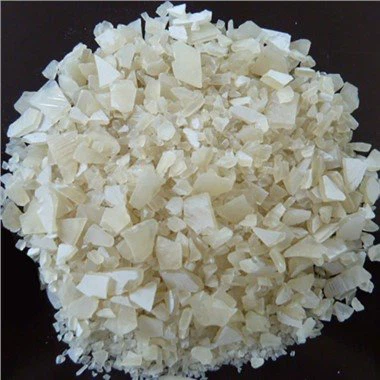
A Comprehensive Analysis of the Alumina Industry: In-depth Insights from Resources to Markets
Feb 10, 2025
In the modern industrial system, alumina, as a key basic material, is widely used in multiple fields, especially in the aluminum industry, and its significance is self-evident. This article will comprehensively and deeply explore the alumina industry, covering the industrial chain composition, raw material supply, production costs, market supply and demand, major enterprises, and future development trends, presenting a complete panorama of the alumina industry to readers.
I. Overview of the Alumina Industrial Chain
The core links of the aluminum industrial chain include "bauxite → alumina → electrolytic aluminum". Bauxite mining belongs to the mining industry, while the production of alumina and electrolytic aluminum belongs to the metal smelting and processing industry. After bauxite is mined and washed, it undergoes a series of complex processes, such as crushing, bauxite dissolution, filtration, acidification, and calcination, to extract alumina. Subsequently, alumina is processed into electrolytic aluminum through electrolytic melting. After electrolytic aluminum is remelted and purified, it can be further processed into various aluminum materials, aluminum alloys, and aluminum powder, etc. In the entire industrial chain, alumina, as an intermediate product, is used for the production of electrolytic aluminum in over 90% of cases, and its demand side is relatively clear.
II. Raw Material Supply - Bauxite
(1) Reserves and Distribution
Aluminum is the most widely distributed metal element in the earth's crust, with an elemental content of approximately 8.7%, ranking first in terms of reserves among all metal elements. According to data from the United States Geological Survey (USGS), the global bauxite reserves are about 32 billion tons. Based on the consumption in 2021, the static guarantee period of aluminum resources is 82 years. The distribution of bauxite globally is relatively concentrated. As of 2022, the global bauxite reserves were 31 billion tons. The top three countries in terms of reserves are Guinea, Vietnam, and Australia, with reserves of 7.4 billion tons, 5.8 billion tons, and 5.1 billion tons respectively, accounting for 24.4%, 19.7%, and 12.2% respectively.
(2) Output and Supply
The global bauxite output is approximately 400 million tons per year. The top five producing countries are Guinea (123 million tons per year, accounting for 29%), Australia (98 million tons per year, accounting for 24%), China (93 million tons per year, accounting for 22%), Brazil (31 million tons per year, accounting for 7%), and Indonesia (20 million tons per year, accounting for 5%). Developed countries globally, except for Australia, are severely lacking in bauxite resources. For instance, the combined bauxite reserves of the United States, France, and Germany are less than 2% of the world's total reserves. Since 2019, except for Guinea, the output of bauxite in core countries such as Australia, Brazil, and China has grown slowly, almost stagnating.
(3) Characteristics of Major Supplying Countries
Guinea: Guinea is the country with the richest bauxite resources globally. Its bauxite has good quality, large-scale deposits, and is easy to produce on a large scale. The mining industry is its largest pillar industry. Besides bauxite, it also has abundant reserves of iron ore, gold, nickel, copper, and cobalt. The cost of bauxite in Guinea is relatively low. With the improvement of maritime infrastructure, its output has surpassed that of Australia in recent years, making it the world's largest bauxite supplier. In the future, it is expected that Guinea's bauxite output will be 143 million tons, 167 million tons, and 196 million tons in 2024, 2025, and 2026 respectively, with an annual growth rate of over 10%. Its proportion and importance in the global bauxite supply will continue to increase. However, Guinea's political situation is unstable, policies are unpredictable, and frequent strikes by trade unions, coupled with the rainy season, often disrupt bauxite supply. Australia: Australia was once the world's largest supplier of bauxite. As of the end of 2023, Australia's bauxite reserves were approximately 3.5 billion tons, accounting for 11.7% of the global total. In 2023, its production was around 100 million tons, accounting for 24% of the global total, with seven mines in operation. The country has a stable political situation and a sound legal system, with clear regulations and laws governing all stages of mineral exploration and mining. About one-third of Australia's bauxite is exported each year, with 98% of it flowing to China, ensuring a long-term stable supply. Currently, there are still many planned development projects in Australia, indicating a considerable growth potential for bauxite in the future.
Indonesia: Indonesia was once one of China's major bauxite importers. In 2022, Indonesia exported 18.98 million tons of bauxite to China, accounting for 15% of China's total bauxite imports for the year. However, starting from June 2023, Indonesia announced a suspension of bauxite exports, aiming to develop an integrated domestic mining-refining industry. Currently, the five operational alumina plants in Indonesia have a combined annual demand for bauxite of 10.75 million tons. Eight more alumina plants are under construction, and upon completion, Indonesia will have 12 alumina plants, with an estimated domestic demand for bauxite reaching 37.5 million tons.
China: China ranks seventh globally in bauxite reserves, accounting for 3% of the world's total. However, the quality of its resources is low, and most of its deposits are small to medium-sized, lacking large bauxite deposits. The mining cost is relatively high. China's annual bauxite demand accounts for more than 20% of the global total, with a severe mismatch between supply and demand. Regionally, China's bauxite is mainly distributed in Guangxi, Henan, Guizhou, and Shanxi provinces. After more than a decade of mining, the open-pit mines in these regions have been largely depleted, and underground mining is difficult, with only about 8 years of static exploitable reserves remaining. Due to environmental governance and the rectification of illegal mining, domestic bauxite output has been declining year by year, and the import dependence has risen sharply from 36% in 2016 to over 70%. The main import sources are Guinea, Australia, and Indonesia. Before 2014, Indonesia was China's largest bauxite import source, with an import share of over 70%. After Indonesia banned the export of raw bauxite in 2016, China increased imports from Guinea and Australia, with imports from Guinea reaching 73% (approximately 50% of resource dependence). The high degree of import dependence and concentration of import sources make bauxite supply vulnerable to policy or weather changes, which can lead to significant fluctuations in alumina prices.
III. Cost Structure of Alumina Production
The cost of alumina production mainly consists of raw material costs, energy costs, and fixed costs, accounting for 65.6%, 28.6%, and 5.8% respectively. In detail, the major components of alumina production costs are bauxite, thermal coal, and caustic soda, accounting for 40%, 13.9%, and 20% respectively. Producing one ton of alumina requires 2.4 to 2.7 tons of bauxite, 0.2 to 0.3 tons of lime, 90 to 100 cubic meters of natural gas, 200 to 300 kilowatt-hours of electricity, 0.24 tons of liquid caustic soda, and 2 to 7 tons of water. Downstream, the production of one ton of electrolytic aluminum requires 2 tons of alumina. The fixed costs in the alumina production process mainly include labor, depreciation, and three fees. There is little difference among different enterprises, and the fixed cost per ton of alumina production is generally within 200 yuan, accounting for a relatively small proportion and can be ignored.
IV. Market Supply and Demand of Alumina
(1) Supply Situation As of May 2024, the global monthly output of alumina was 11.28 million tons, with China's output accounting for more than half of the global total. Unlike the downstream electrolytic aluminum industry, which has set a hard capacity ceiling, China's alumina capacity is relatively flexible. In recent years, with the growth of aluminum consumption and the rapid development of the aluminum industry, the output of alumina has continued to increase. In 2022, the global output of alumina was approximately 140 million tons, with China accounting for 55%, making it the world's largest producer of alumina. However, while China's alumina output has continued to grow, the problem of overcapacity has gradually emerged. In 2022, China's built alumina capacity was 99.5 million tons, with an output of 72.8 million tons. Compared with the 45 million tons capacity ceiling of electrolytic aluminum, the overcapacity is obvious.
(II) Demand Situation
The demand for alumina is mainly concentrated in the production of electrolytic aluminum, with over 90% of alumina used for this purpose. With the continuous growth in demand for aluminum products in the construction, transportation, electronics, packaging, and other fields, the demand for electrolytic aluminum has steadily increased, thereby driving the growth of the alumina market. In addition, with the enhancement of environmental awareness and the development of new energy and new materials, the application of alumina in non-metallurgical fields is also expanding, such as in the production of various refractory bricks, ceramics, and flame retardants. The demand for alumina in defense and military, electronics, and new energy fields is gradually increasing, providing new growth points for the alumina market.
V. Major Enterprises in the Alumina Industry
(I) Aluminum Corporation of China (Chalco)
As a leading enterprise in China's alumina industry, Chalco, with its strong technological research and development capabilities, complete industrial chain, and rich resource reserves, continuously promotes the development of the industry. Its market share is stable at around 30%, making it the leading enterprise in the domestic alumina market. The company has significant advantages in bauxite mining, alumina production, electrolytic aluminum smelting, and aluminum processing. It owns multiple large bauxite mines and alumina production bases, and its technological level is at the forefront of the country. It plays an important role in the formulation of industry standards and technological innovation.
(II) China Minmetals Corporation
China Minmetals Corporation is one of the important participants in China's alumina industry, and its alumina business holds an important position in the industry. With its advantages in resource extraction and production processing, China Minmetals Corporation has performed well in market competition. The group has rich mineral resources worldwide and continuously enhances the competitiveness of its alumina business through resource integration and industrial layout optimization. In terms of technological innovation, China Minmetals Corporation has increased its R&D investment, aiming to improve the production efficiency and product quality of alumina and promote technological progress in the industry.
(III) Weiqiao Group
Weiqiao Group is a large enterprise in China's alumina industry, with its alumina production capacity and market share ranking among the top. Weiqiao Group focuses on technological innovation and industrial upgrading, continuously improving product quality and market competitiveness. By introducing advanced production technologies and equipment, optimizing production processes, and reducing production costs, Weiqiao Group has gained a favorable position in market competition. At the same time, the group actively expands overseas markets and strengthens cooperation with international enterprises to enhance its influence in the global alumina market.
VI. Development Trends of the Alumina Industry
(I) Capacity Optimization
With increasingly strict environmental policies and intensified market competition, the alumina industry will accelerate the pace of capacity optimization and structural adjustment. Eliminating backward capacity and increasing industrial concentration will become an inevitable trend in the industry's development. Through resource integration and industrial layout optimization, the overall competitiveness of the industry will be enhanced to achieve sustainable development.
(II) Technological Innovation
Technological innovation is an important driving force for the development of the alumina industry. In the future, alumina enterprises will continue to increase R&D investment, promoting technological innovation and industrial upgrading. Develop new production processes to enhance the efficiency and quality of alumina production, reduce energy consumption and environmental pollution. In high-end fields such as high-purity alumina, continuously break through technical bottlenecks, increase product added value, and meet the demands of the electronics, new energy and other sectors for high-end alumina materials.
(3) Green Development
Environmental protection and sustainable development will become important trends in the alumina industry. Enterprises will strengthen environmental protection facility construction, improve resource utilization efficiency, and reduce environmental pollution and emissions. Adopt clean production technologies to achieve green production processes. At the same time, enhance the comprehensive utilization of tailings, waste residues and other wastes to reduce resource waste and promote the industry's transformation towards green and sustainable development.
As an important part of the aluminum industry, the alumina industry plays an indispensable role in global economic development. From the distribution and supply of bauxite resources to the production, market supply and demand of alumina, as well as the main enterprises and future development trends of the industry, each link is closely connected and mutually influential. With the development of the global economy and technological progress, the alumina industry will face more opportunities and challenges. It needs to continuously optimize production capacity, innovate technologies, and achieve green development to adapt to market changes and maintain the industry's sustained and healthy development.
If you are interested in us, please click on the link below to search for us or the products you need on Made in China website
https://67d762fd1f819b6a.en.made-in-china.com/
Our Whatsapp:+8613969341413/Kevin